


Dai Davies Not Out - 78
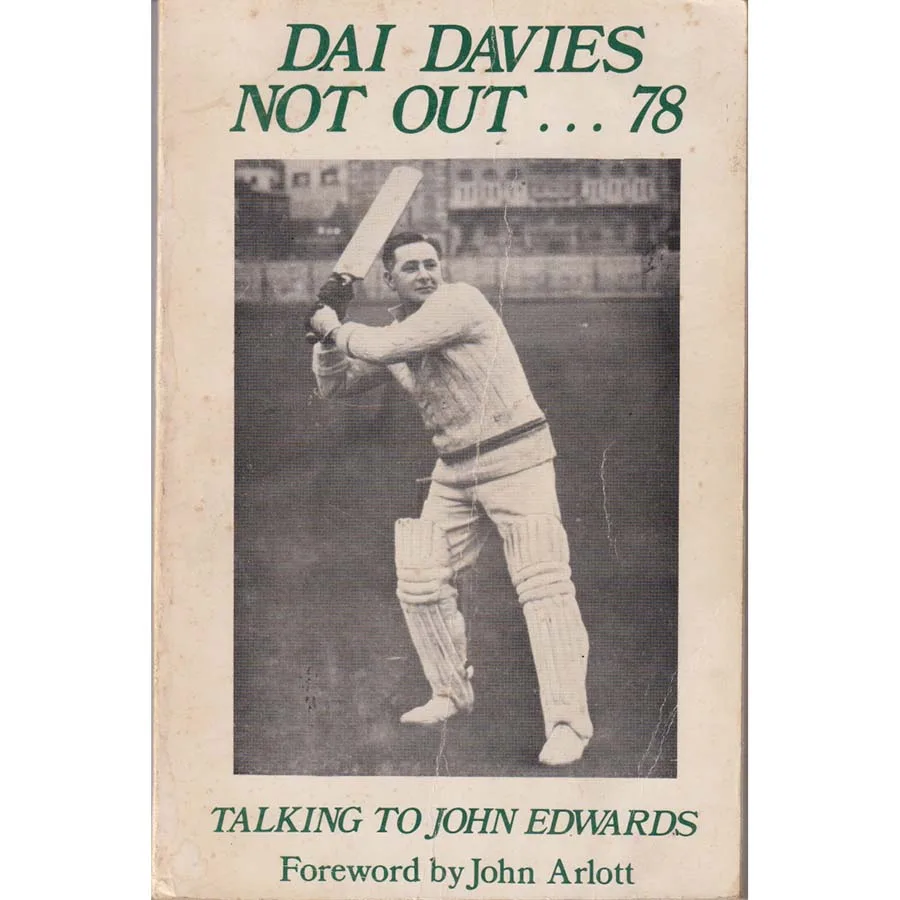
Publisher: Dyfed Publishers
Format: Paperback
ISBN: none
There are sports books, and then there is Dai Davies Not Out – 78, which sounds less like a title and more like the scoreboard of a very particular kind of immortality.
Published in 1975 by Dyfed Publishers and written by John Edwards, this is exactly the kind of wonderfully specific sporting survivor Crappy Old Books likes to rescue from the pavilion end of history. It belongs to that glorious class of books which assume, quite correctly, that one innings, one player, one score, and one life around the game may be enough to justify an entire volume. Modern publishing might have insisted on a subtitle involving grit, glory and leadership. This book simply turns up with a name, a score, and the quiet confidence that those who matter will understand.
And really, what a title. Not Out – 78. It has all the melancholy grandeur of cricket compressed into three words and a number. Not a century, tantalisingly. Not a duck, mercifully. Seventy-eight: a score that feels both substantial and gloriously unfinished, the sort of number that suggests solid contribution, stubbornness, and the possibility that the innings — like the man — deserves to be remembered for more than statistics alone. “Not out” is one of cricket’s finest little phrases. It means survival, yes, but also incompletion, endurance, an argument with finality. It is sporting language at its most quietly philosophical.
Dai Davies, of course, is exactly the sort of figure who suits that kind of title. The great charm of sporting books from this era is that they emerge from a world where local heroes, county loyalties, touring sides, club stories and long afternoons still mattered enough to be written down properly. This is not a glossy modern production full of media-trained platitudes and forewords by men in blazers discussing “high-performance environments.” This is older and better: a book from when sport still carried the smell of grass, tea, train journeys and people who remembered innings in weather terms.
John Edwards, as writer, gives it that lovely old-style authority of the journalist or recorder who knew that the game was not just scores but character, anecdote, atmosphere and the long human business surrounding the boundary rope. Books like this are rarely just about batting averages. They are about the texture of a sporting life — the clubs, the grounds, the stories retold over years, the strange alchemy by which a player becomes part of local folklore.
As sold by Crappy Old Books, this copy is in good condition, which feels entirely right for a 1975 cricket title. A good-condition sports book of this kind ought to look preserved but not pampered, as though it may have spent time beside scorebooks, old annuals, and the sort of shelves where sport was taken seriously but not fetishised. Good condition means it is still shelf-worthy, readable, and ready to charm the next custodian without pretending to be a museum piece.
There is also something wonderfully ironic about how beautifully niche a book like this now seems. Once upon a time, such a title would have made immediate sense to the right readership: of course there should be a book about Dai Davies; of course “Not Out – 78” is enough of a hook; of course one innings or one symbolically chosen score can stand for a whole character. Today, in the age of algorithmic content sludge and athlete memoirs assembled by committee, the specificity feels almost radical. It is a reminder that sport used to generate memory first and product second.
And that is part of the delight here. Cricket, especially in book form, has always been about more than results. It is about lore. About scorecards turning into stories. About small acts of endurance acquiring literary weight out of all proportion to their apparent scale. A man makes 78 not out and, somehow, through memory, affection and the right kind of writer, it becomes a title fit to outlive the innings itself. That is cricket in a nutshell: absurdly exact, faintly sentimental, and all the better for both qualities.
For collectors, this is a lovely find: a 1975 Dyfed Publishers cricket title, locally rooted, charmingly specific, and very much of the world before sports publishing became overinflated and under-observed. For readers of cricket books, it promises the sort of thing that often proves richest: not a corporate sporting memoir but a human-scale record of a player and a game still embedded in community. For shelf appeal, it is first-rate. A book called Dai Davies Not Out – 78 says that someone in the house understands that statistics can become poetry if left long enough in Welsh air.
It is also the sort of book that flatters its owner in exactly the right way. Not by shouting prestige, but by implying curiosity, affection for old sport, and a willingness to appreciate the half-forgotten corners of cricketing culture where the best stories often hide. This is not merely a book for cricket obsessives — though they will certainly approve — but for anyone who likes the odd, noble fact that games leave paper trails, and some of those paper trails become unexpectedly moving.
So here we have a good-condition 1975 survivor: sporting, local, evocative and gloriously unconcerned with mass-market polish. It is the kind of title Crappy Old Books loves best — a little obscure, deeply rooted, and full of the quiet charisma that only old sports books seem to manage.
Dai Davies Not Out – 78 is more than a cricket book. It is a compact monument to innings, memory and the charming arrogance of a sport that can turn a score into a biography and a phrase into an epitaph. If you like cricket, Welsh sporting history, old local publishing, or simply the strange poetry of scoreboards that refuse to become final, this is a splendid thing to have on the shelf.
Keep browsing: See more Sports books Other books by John Edwards
